JMU Nation,
I regularly receive financial questions covering a wide spectrum of topics. These questions include topics such as: why does JMU spend so much on athletics, why is our budget so much larger than some other institutions, or shouldn't it be easy to implement something like cost of attendance when our budget is so large? The structure of our budget is a complicated topic, as is explaining some of the challenges we face in maintaining it. As we move into a new fiscal year, my hope is to shed light on some of those factors in a transparent way that provides better understanding and insight of why we make the decisions we do, all with the big picture in mind of the success and care of our student-athletes and providing the model experience for them at JMU.
Importance of Athletics
The student-athlete experience is the backbone of our operation. Research by the NCAA and other organizations has proven the personal development benefits of intercollegiate athletics in areas such as teamwork, leadership, overcoming adversity, time management, work ethic, skill development, etc. – all of which will likely carry over to any future pursuit that a student-athlete might encounter. Student programs and extracurricular activities are an important part of the campus fabric at James Madison for many of these reasons.
Beyond the student-athlete focus, athletics plays a critical role in the formation of a vibrant campus culture. Few events on campus bring 25,000 people together to reconnect, form memories and celebrate school pride in the same manner as an athletics event. While athletics plays a direct role in recruiting 450 students, it also plays a role in drawing attention to the university to help recruit the remaining 20,000+ students. The same benefits of athletics in student recruitment also carry over to alumni engagement.
We saw this impact in action when ESPN's College GameDay visited last October. We sold 10,000 game tickets within a few hours and had 12,000 individuals on the quad for reasons that boil down to the passion we all share for JMU. The university had more than $3 million in media exposure value thanks to one athletics event. Putting College GameDay aside, our research also indicates that over half of all print and digital media mentions of James Madison University relate to athletics. At the end of the day, that increases overall interest in our university.
The Budget
Reviewing the
fiscal year that closed on June 30, 2015, our overall operating budget was $44,825,701. I frequently hear comments regarding our budget's scale compared to conference or regional schools, or questioning the ease of adding "just one more thing" given the size of our budget. These are complicated questions and the areas below will explain some of the contributing factors.
The subject of the size of our budget begins with the transparent approach of JMU. As an institution, we report all activities and services related to athletics as part of our athletics operational costs. Many of our peers in Virginia and in the CAA do not report financial data in this way. For example, greater than $6 million of our budget is facility debt services, nearly $1 million is dedicated to spirit groups and nearly $3 million covers indirect costs paid by athletics to the institution for certain university services. That's $10 million of expenses included in the athletics budget at JMU that you will not find in the ledgers of many of our peers. For instance, at some conference institutions, operational costs of their facilities (lighting, heating, utilities, etc.) are designated to a different line within the university's facilities management budget even though the significant majority of the building's use is dedicated to athletics. Thus, that figure never appears in the athletics budget of those schools. The Commonwealth of Virginia has formed a task force that is currently working to bring uniformity to athletics budget reporting so that a more accurate comparison can be made among all state institutions.
Fully Funding Sport Programs
The topic of peer analysis also relates to how we have elected to fund our programs. One outcome of our Title IX-driven decision in 2006 to cut 10 sports was the ability to better steer resources to the 18 programs that remained and to be compliant with Title IX guidelines for our sport programs. As a result, we have fully funded all of our programs to meet the participation requirements for male and female student-athletes.
What does that mean? JMU offers the NCAA-maximum number of scholarships in every sport. Each of our programs have been given the scholarship support that they need to field the most competitive team possible. Additionally, we have committed to fully-funded coaching staffs for our programs. Each of our sports have assistant coaches with full-time, 12-month appointments that do not require teaching loads or other duties within the department outside of their coaching duties. Many of our peers cannot make that claim across all of their sport programs. For example, softball at JMU can be successful because we have the full limit of scholarships, we fully fund our coaching staff and we've made a commitment to first-class facilities. We work diligently to ensure that each of our 18 programs are treated equally and fairly. We are not a school where a football or basketball program is central to all decisions by the department. Much of the reason for that circles back to the emphasis on the student-athlete experience.
Facilities
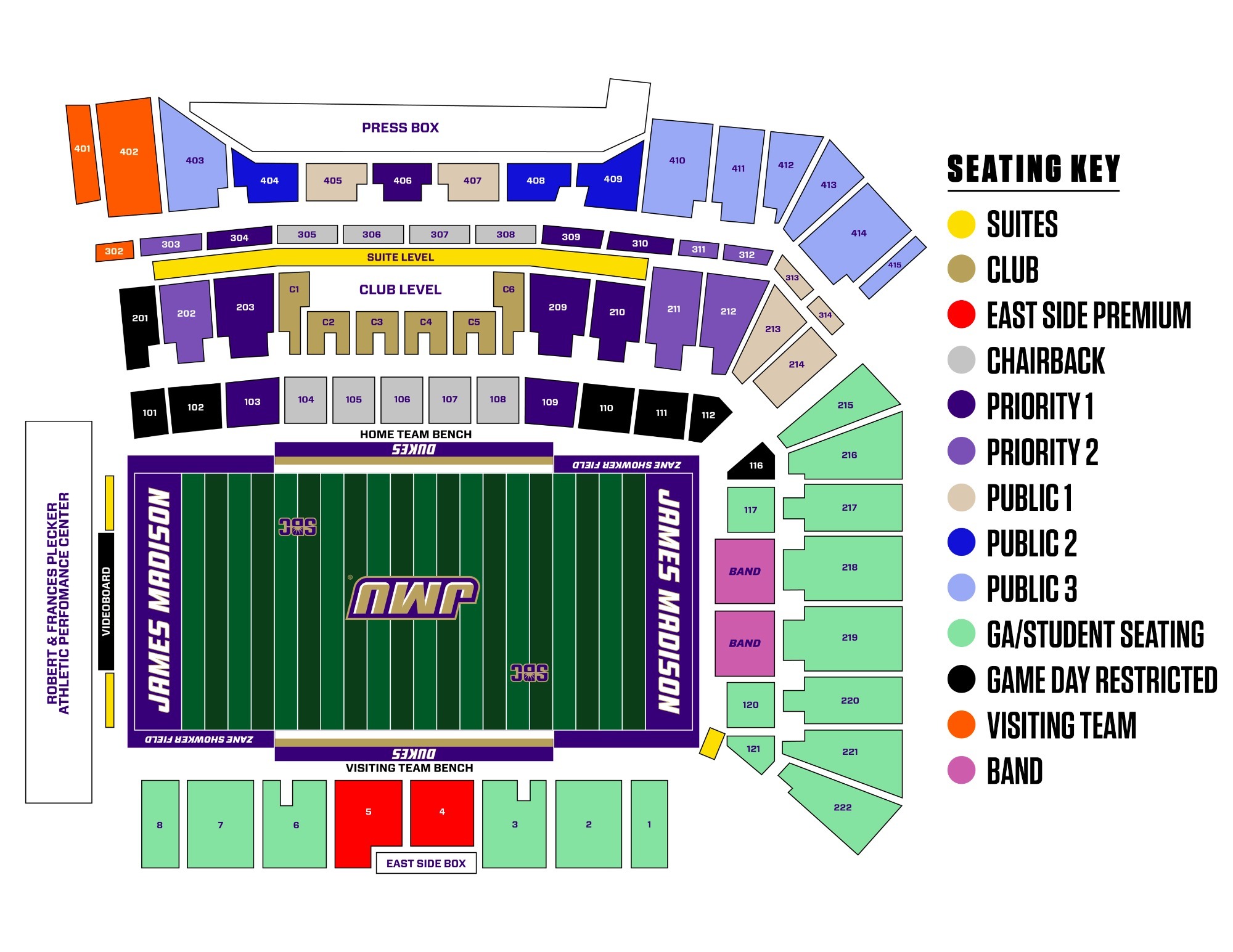
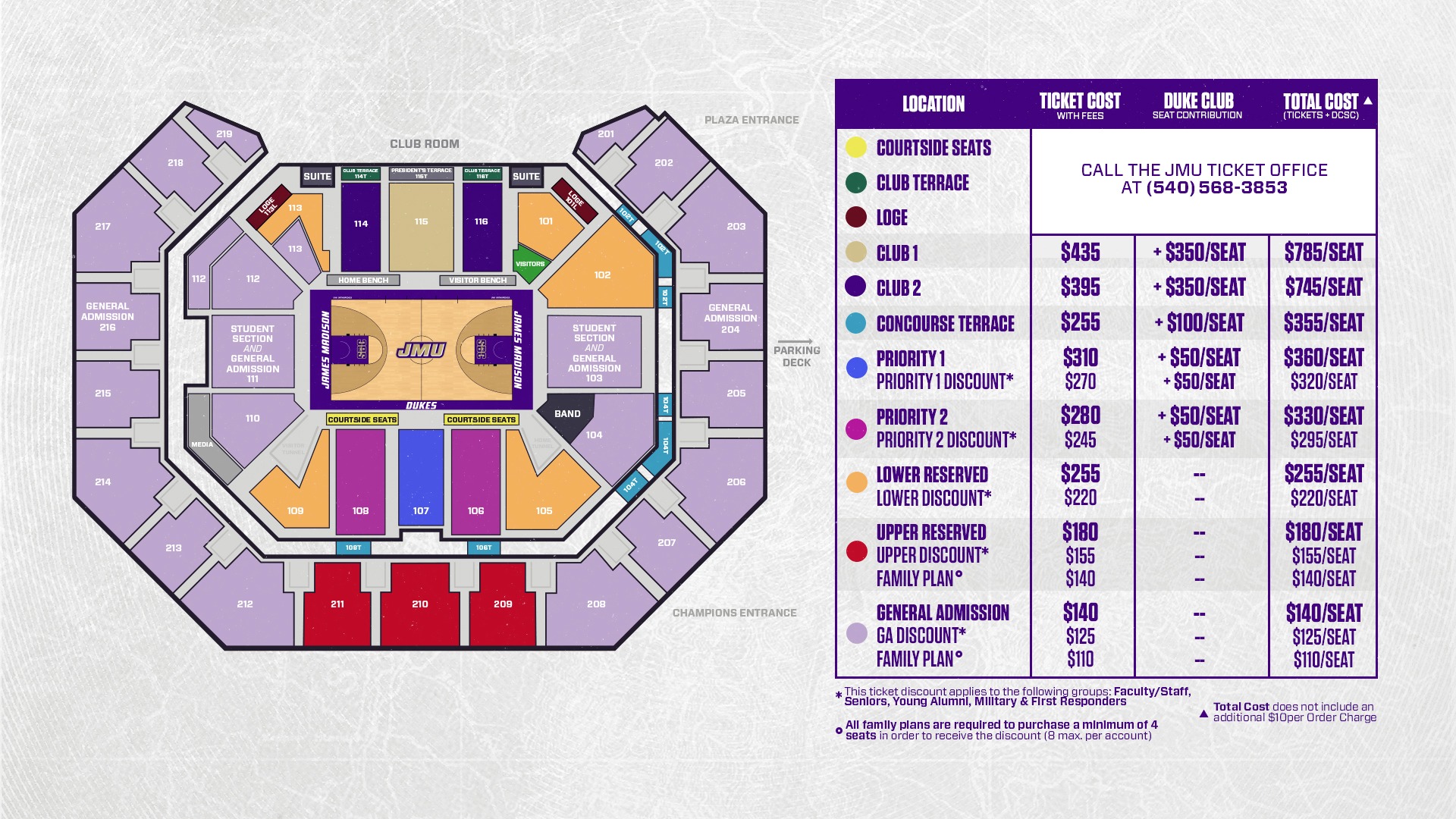
The equal treatment also carries over to facilities. We have made a commitment to ensuring that every sport possesses the competitive and support facilities needed to provide the best possible experience for our student-athletes and fans. We built the Athletics Performance Center in 2005 and expanded Bridgeforth Stadium in 2011, built Veterans Memorial Park for baseball and softball in 2010 and built Sentara Park, formerly University Park, for lacrosse, soccer and track and field in 2011. Other recent facility renovations within the last 10 years have included an outdoor short-game practice facility and indoor training area for golf; Olympic-level turf upgrades and signage improvements at field hockey; new video board, signage improvements and training equipment for swimming and diving as well as Olympic-level floor replacement and graphics at volleyball. Future next steps will include a new Convocation Center for our basketball programs and new facilities for our tennis squads. We believe that our approach to facilities further separates JMU in our commitment to sport programs. This approach contributes to an increase in the facility debt service expense as JMU has proactively upgraded facilities over the last 10 years following a 20 year period of time where minimal changes were made.
Cox Bill/Student Fee Reliance
Several recent or upcoming developments will cause further impact on our budget. As of July 1, new legislation in Virginia, known as the Cox Bill, will regulate the usage of student activity fees to fund intercollegiate athletics programs. The bill measures income generated from fees compared to the overall income generated by athletics.
For the fiscal year ending June 30, 2015, JMU generated over $35 million of its revenue from these student fees. The Cox Bill states that FCS programs such as JMU and William and Mary must rely on student fees for no more than 70% of its expenses. However, for purposes of these calculations, the legislation also provides for excluding certain expenses that I discussed above that JMU includes in its athletics budget – namely spirit groups, debt services (that were approved by the Commonwealth prior to June 30, 2015) and institutional service charges. After that consideration, JMU sits at 58 percent of its budget stemming from student fees, which is well below the Cox Bill requirement at the FCS level. Should the university have an invitation to an FBS conference to consider in the future, the Cox Bill requirement is 55 percent. In order to hit that mark, JMU would need to increase its athletics-generated revenue by $8.5 million by 2021-22. It is also worth noting that Virginia is one of just two states in the country that currently places this student fee limitation on its college athletics programs. Additionally, it is important to note that the new Convocation Center project was approved by the state prior to the Cox Bill and therefore is exempt from consideration.
Cost of Attendance
We recently announced that we will begin offering cost of attendance (COA) stipends for our basketball programs beginning with the 2017-18 academic year, an initiative that will allow Coach Rowe and Coach O'Regan to begin recruiting with COA this summer. I have already written in this article that we pride ourselves on treating all of our sport programs equally and want to give all 18 programs the tools needed to excel. So why are we implementing cost of attendance only for basketball at this time?
JMU took a careful and thoughtful approach to our implementation of cost of attendance. At this time, basketball is the primary sport in which our peers are offering cost of attendance. Few football programs at the FCS level are providing it, while few schools outside of the power five conferences are offering it for all sports. There is a bottom line impact for JMU as
it will cost $125,000 annually to fund cost of attendance for basketball compared to the price tag for all sports of just over $1 million. Should the university elect to further implement cost of attendance in the future, we will need to find other revenue sources to fund it without impacting student fees.
Additionally, cost of attendance is sometimes misunderstood among the casual athletics supporter. The number is a university-reported figure determined by the University Office of Financial Aid per federal guidelines, and is intended to inform families of the reasonable cost to attend the university beyond tuition and fee expenses. That figure includes estimates for travel to and from the university and other costs routinely assumed by a student. The Cost of Attendance calculation will be different from one institution to another and is an amount that impacts other scholarship students at the university outside of athletics. It is also an amount that is recalculated every year, which means it is likely to increase over time. Under the new autonomy structure of the NCAA, Division I programs were allowed to start providing this additional cost of college to its student-athletes in 2015.
New FLSA Regulations
As many people know, the Federal Government's new policies under the Fair Labor Standards Act will take effect in December. Of significance, the new regulations will change the salary level for overtime exempt status for employees to $47,476 or nearly double the current mark of $23,660. This law will have a significant impact for our personnel costs, which already account for nearly $12.5 million of our budget. Athletics events typically take place during evenings and weekends when student-athletes are not in class. That means our staff members work significant overtime hours in order to perform their job functions at a high level. While we are still working with human resources to explore all options, our early conservative estimates point to a significant budget impact in the future.
Conference Distributions
Several of the topics above point to increased expenses, but it is also important to consider areas of decreased revenue. One such area is anticipated decreases in conference revenue distribution. In simple terms, the NCAA earns the vast majority of its revenue from the men's basketball tournament television contract. That money then gets distributed to the conferences and in turn the member schools. That distribution is based upon the number of teams and the number of wins for each conference in March Madness over a rolling six-year period. In 2011, the CAA earned its largest share of that money in its history when three teams qualified for the tournament and VCU advanced to the Final Four. Given the six-year payout structure, in 2018 the CAA will no longer benefit from the revenue distribution of that 2011 season. In real terms, we anticipate that JMU's payout from the conference will be reduced from $400,000 per year to $28,000 in 2018. That revenue distribution and the conference men's basketball championship account for a major portion of the league's revenue streams. That's why we root for multiple bids and wins for our conference members each March.
As we're seeing across the country, Athletics Conferences are taking an aggressive approach to identifying and expanding their revenue opportunities. In addition to the NCAA payouts, many leagues are facing uncertain futures in terms of television and digital broadcasting and the associated revenue distributions from those contracts. The CAA, under the direction of new commissioner Joe D'Antonio is currently engaging in strategic planning that includes a careful look at potential revenue streams.
FBS
While this article will not analyze the positives and negatives of any future invitations that might arise for the university, it is important to understand the financial impact with which we would be faced given such a decision. As already stated, the Cox Bill will require JMU to decrease its percentage of revenue generation from student fees from 58 percent currently to 55 percent. At the same time, a commitment to FBS means an increase in expenses in areas such as additional football scholarships, cost of attendance for additional sports, travel increases for all of our sport programs, increases to facility infrastructure and personnel cost increases. Additionally, we would face exit fees from the Colonial Athletic Association of $1,250,000 and entrance fees for the new league conservatively set between $2,000,000 - $2,500,000. As I just alluded to, further adding complexity to the financial issue, we have recently witnessed some FBS leagues outside of the power five have their television revenues decrease significantly under new agreements with their terms significantly reduced in length. That means JMU would need to find other internal sources to combat the increased costs associated with a move to FBS without a dependence on revenue generated from a new conference television package.
Revenue Generation
Even without a move to FBS, we know that some of our current operating costs will continue to increase. The cost of a college education will continue to rise, which will in turn increase our scholarship bill, a number that already sits at nearly $8 million. Unlike some institutions, JMU does not offer tuition waivers whereby the cost of an athletic scholarship is forgiven or an out-of-state scholarship is charged at the in-state rate. Athletics pays the university the full scholarship costs associated with each athletic scholarship. In addition, salaries and related benefit costs will continue to rise as mandated by the state legislature. Other routine operating costs, namely travel and equipment, will continue to increase over time. Outside of student fees and conference distributions, our opportunities for generating revenue are somewhat limited. Looking back at the 2014-15 fiscal year, we pulled in $2.5 million in ticket sales, $430,000 in game guarantees, $2.5 million in athletics donations and $1.4 million from corporate partnerships. Given our goal of making postseason play each year, we are only able to schedule one FBS opponent annually. The dialog that some FBS leagues are electing to not play FCS opponents in the future gives us pause as we contemplate anticipated future revenues. That means that our ticket sales, annual donor giving and corporate sponsorships will need to continue to increase to keep pace with these associated cost increases. To a large degree this puts the onus back on our constituents if we are going to continue to operate at the high level we've all come to expect from JMU Athletics.
It is our hope that this information is helpful in broadening your understanding of the financial challenges and opportunities we face with the athletic program at JMU. As with any topic, we are able only to scratch the surface with any level of detail in a very complicated financial structure. This past year was a tremendously successful one for our student-athletes and sport programs, and given the level of support spelled out above, there's no reason to believe we can't achieve this on an annual basis. You've heard repeatedly how critical donor giving is to the success of our athletics program. Hopefully this piece provides insight, an understanding of issues and explains why we need your help now more than ever. Our student-athletes, coaches and staff are so appreciative of your support. We all bleed purple and all strive to brighten the lights of Madison!
Go Dukes!
 Jeff Bourne
,
@BourneJeff
JMU Director of Athletics
June 30, 2015 Fiscal Report for JMU Athletics