James Madison University | Official Athletics Site
Beyond the Pads: Where Wayne Knight Finds Meaning
12/13/2025 3:30:00 PM | Football
Wayne Knight didn't grow up in a place where college football dreams were expected. Smyrna, Delaware, isn't a pipeline town. It's a place where you play because you love it, not because scholarships are promised.
That love showed itself early.
At six years old, Wayne tried to sign up for Pop Warner football and was turned away for being too young. A year later, when he was finally allowed to play, the game became a constant — the one thing that never left.
"I was in middle school when my older brother Will started to receive college interest. And it wasn't really a common thing where we're from, Smyrna, Delaware, wasn't a common thing. And he kind of set it off for us, rang it back to the town, to the community. We saw that he could take this somewhere else."
That desire — to be involved, to matter, to make something happen — still defines him today.
Football in the Knight household was never a solo journey. It was a blueprint built by older brothers who went first so the younger ones could dream bigger.
In Delaware, Will Knight wasn't just good; he was legendary, with records, recognition, and respect. He became "Mr. Delaware," a name that still carries weight back home.
Then came Wayne and his younger brother Yamir soon after.
Watching that unfold changed everything for Knight.
By middle school, football stopped being just a game. It became a vehicle, a way out, a way forward.
He watched his brothers navigate recruiting, transition to college, and prove that success didn't end after high school. When Will transferred back home to the University of Delaware and thrived, it reinforced something deeper.
Despite idolizing DeSean Jackson and dreaming of being a receiver, Knight eventually accepted what football was telling him.
At 5-foot-9, he didn't fit the prototype. He knew that. Everyone reminded him. But instead of fighting it, he learned how to weaponize it — how being smaller meant being harder to tackle, quicker in space, more dangerous once defenders missed.
"I wanted to be a receiver. My idol was DeSean Jackson growing up. I was an Eagles fan, but the height thing didn't let that work out. So, the running backs always had the ball in their hands. So, I just always wanted the ball in my hand."
Recruitment came slowly. COVID stalled exposure. Camps disappeared. Opportunities shrank. Still, Knight stayed patient, stacking offers from FCS programs and eventually committing to Stony Brook.
Then, five days before signing day, everything changed.
At 7 a.m., Curt Cignetti, the head coach at JMU at the time called, offering Knight a spot on the roster.
"He asked me, 'Do you want to be a Duke?'" Knight laughed. "I committed on the spot."
No official visit. No photo ops. Just belief in a program.
"I've always been part of a winning culture, and I never heard of JMU ever losing."
The transition to college wasn't glamorous. JMU's running back room was loaded, and under the staff in place at the time, Knight's role was limited with no clear or consistent path to contributing on the field.
Carries were scarce, opportunities were unclear, and the future felt uncertain.
Four games into his sophomore season, Wayne made the hardest decision of his life - stepping away from JMU football to explore his options and to retain a year of eligibility after seeing just nine total offensive snaps through the opening month.
It wasn't part of the plan. It was never imagined.
When Bob Chesney arrived in Harrisonburg, Knight didn't know what to expect. There were no guarantees. No promises.
But Chesney wanted to see the person first.
"He wanted to know who I was," Knight said. "That was the biggest thing."
And that mattered.
When Knight was welcomed back in January 2024, it wasn't just a return to football — it was a second chance to do it right. He attacked it with humility, patience, and gratitude.
The leap didn't happen alone.
"As a running back group, we spent the whole summer training together and just learning from each other. When you approach a game like that, where you can learn from other people, you're not just in your own head or trying to learn from yourself; that puts you in a place where you're open-minded, and you're open to just exploring new things in your game… So just being able to learn from their games and piggyback off of some of the great things that they do. It allowed me to elevate my game."
That environment — open, collaborative, unselfish — unlocked something. Knight stopped pressing. Stopped trying to prove himself on every carry.
Instead, he played freely.
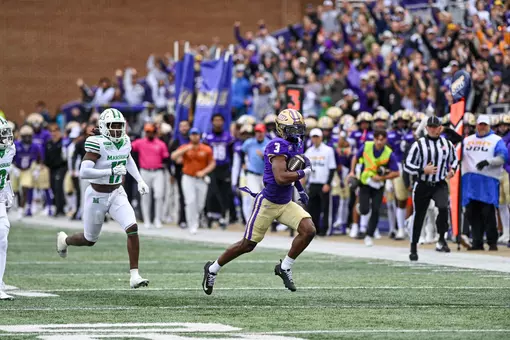
That impact came everywhere: grinding runs, clutch receptions, broken tackles that felt impossible. When the offense needed stability early in the season, Knight became it. When injuries hit, he endured. When momentum needed changing, he delivered.
When he breaks free? "Don't get caught," he laughed.
His mother, present for nearly every game she can attend, represents every sacrifice made behind the scenes.
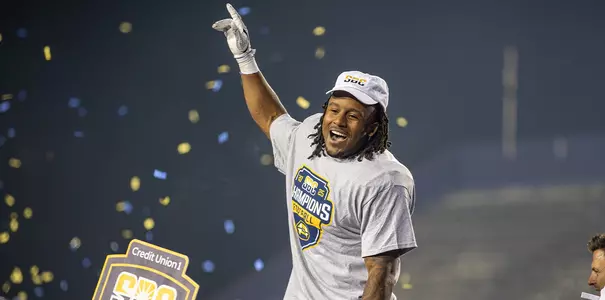
Seeing her in the stands during big plays and championship moments, crying as he held onto his Sun Belt Championship MVP trophy, is something Knight carries with him.
"She's always been very supportive. She comes to almost every single home game, even some away games, that's close enough for her to make it. She's there. She's always sacrificed a lot of her time just to be there for us… Just being able to see her, see me hold a trophy up, and win a conference championship at home, it was definitely a good feeling."
Away from football, Wayne Knight is intentionally normal.
He's a gamer. A "low-key" fashion guy who takes pride in his style. A snowboarder — something he picked up with friends during winter trips to the Poconos, a hobby he now jokingly keeps "under the rug."
Knight's vision extends far beyond statistics.
One day, he wants to open an athletic facility back home, a place for kids who don't have access to resources, training, or mentorship.
"I want to open up an athletic facility and just influence young athletes, give them avenues and direction in whatever sport they're playing, and give resources, because I know where I come from, we don't really have a lot of that stuff or a lot of those resources. So opening up an athletic facility in our area is what I want to do."
It's personal. It's intentional. And it's rooted in his own story.
"A lot of these kids, they just need someone to look up to. They may not have someone to look up to, so just being able to interact with so many people that they may look up to or people that they aspire to be or want to be in their shoes, it can open up ideas for them. It gives them the confidence to say, 'hey, I could do the same thing that you're doing'."
As JMU continues its historic run, from conference titles to the College Football Playoff, Knight often reflects.
When fans chant his name. When teammates surround him. When moments feel surreal.
He doesn't see superstardom.
He sees growth.
"I always reflect on the beginning of my JMU career, how things started, and where I'm at right now. It's always the first thing that I do in these kinds of moments but being able to have the success that I've had, and being in that moment, where everybody is like a 'Wayne Knight fan', it just feels like you're so gratifying for everything I've done up to this point."
At the end of his journey, beyond touchdowns and trophies, Wayne Knight wants to be remembered simply.
"I'm a genuine person, and I'm authentic on the field, off the field," he said with a smile. "I'm going to be me at the end of the day."
That love showed itself early.
At six years old, Wayne tried to sign up for Pop Warner football and was turned away for being too young. A year later, when he was finally allowed to play, the game became a constant — the one thing that never left.
"I was in middle school when my older brother Will started to receive college interest. And it wasn't really a common thing where we're from, Smyrna, Delaware, wasn't a common thing. And he kind of set it off for us, rang it back to the town, to the community. We saw that he could take this somewhere else."
That desire — to be involved, to matter, to make something happen — still defines him today.
Football in the Knight household was never a solo journey. It was a blueprint built by older brothers who went first so the younger ones could dream bigger.
In Delaware, Will Knight wasn't just good; he was legendary, with records, recognition, and respect. He became "Mr. Delaware," a name that still carries weight back home.
Then came Wayne and his younger brother Yamir soon after.
Watching that unfold changed everything for Knight.
By middle school, football stopped being just a game. It became a vehicle, a way out, a way forward.
He watched his brothers navigate recruiting, transition to college, and prove that success didn't end after high school. When Will transferred back home to the University of Delaware and thrived, it reinforced something deeper.
Despite idolizing DeSean Jackson and dreaming of being a receiver, Knight eventually accepted what football was telling him.
At 5-foot-9, he didn't fit the prototype. He knew that. Everyone reminded him. But instead of fighting it, he learned how to weaponize it — how being smaller meant being harder to tackle, quicker in space, more dangerous once defenders missed.
"I wanted to be a receiver. My idol was DeSean Jackson growing up. I was an Eagles fan, but the height thing didn't let that work out. So, the running backs always had the ball in their hands. So, I just always wanted the ball in my hand."
Recruitment came slowly. COVID stalled exposure. Camps disappeared. Opportunities shrank. Still, Knight stayed patient, stacking offers from FCS programs and eventually committing to Stony Brook.
Then, five days before signing day, everything changed.
At 7 a.m., Curt Cignetti, the head coach at JMU at the time called, offering Knight a spot on the roster.
"He asked me, 'Do you want to be a Duke?'" Knight laughed. "I committed on the spot."
No official visit. No photo ops. Just belief in a program.
"I've always been part of a winning culture, and I never heard of JMU ever losing."
The transition to college wasn't glamorous. JMU's running back room was loaded, and under the staff in place at the time, Knight's role was limited with no clear or consistent path to contributing on the field.
Carries were scarce, opportunities were unclear, and the future felt uncertain.
Four games into his sophomore season, Wayne made the hardest decision of his life - stepping away from JMU football to explore his options and to retain a year of eligibility after seeing just nine total offensive snaps through the opening month.
It wasn't part of the plan. It was never imagined.
When Bob Chesney arrived in Harrisonburg, Knight didn't know what to expect. There were no guarantees. No promises.
But Chesney wanted to see the person first.
"He wanted to know who I was," Knight said. "That was the biggest thing."
And that mattered.
When Knight was welcomed back in January 2024, it wasn't just a return to football — it was a second chance to do it right. He attacked it with humility, patience, and gratitude.
The leap didn't happen alone.
"As a running back group, we spent the whole summer training together and just learning from each other. When you approach a game like that, where you can learn from other people, you're not just in your own head or trying to learn from yourself; that puts you in a place where you're open-minded, and you're open to just exploring new things in your game… So just being able to learn from their games and piggyback off of some of the great things that they do. It allowed me to elevate my game."
That environment — open, collaborative, unselfish — unlocked something. Knight stopped pressing. Stopped trying to prove himself on every carry.
Instead, he played freely.
That impact came everywhere: grinding runs, clutch receptions, broken tackles that felt impossible. When the offense needed stability early in the season, Knight became it. When injuries hit, he endured. When momentum needed changing, he delivered.
When he breaks free? "Don't get caught," he laughed.
His mother, present for nearly every game she can attend, represents every sacrifice made behind the scenes.
Seeing her in the stands during big plays and championship moments, crying as he held onto his Sun Belt Championship MVP trophy, is something Knight carries with him.
"She's always been very supportive. She comes to almost every single home game, even some away games, that's close enough for her to make it. She's there. She's always sacrificed a lot of her time just to be there for us… Just being able to see her, see me hold a trophy up, and win a conference championship at home, it was definitely a good feeling."
Away from football, Wayne Knight is intentionally normal.
He's a gamer. A "low-key" fashion guy who takes pride in his style. A snowboarder — something he picked up with friends during winter trips to the Poconos, a hobby he now jokingly keeps "under the rug."
Knight's vision extends far beyond statistics.
One day, he wants to open an athletic facility back home, a place for kids who don't have access to resources, training, or mentorship.
"I want to open up an athletic facility and just influence young athletes, give them avenues and direction in whatever sport they're playing, and give resources, because I know where I come from, we don't really have a lot of that stuff or a lot of those resources. So opening up an athletic facility in our area is what I want to do."
It's personal. It's intentional. And it's rooted in his own story.
"A lot of these kids, they just need someone to look up to. They may not have someone to look up to, so just being able to interact with so many people that they may look up to or people that they aspire to be or want to be in their shoes, it can open up ideas for them. It gives them the confidence to say, 'hey, I could do the same thing that you're doing'."
As JMU continues its historic run, from conference titles to the College Football Playoff, Knight often reflects.
When fans chant his name. When teammates surround him. When moments feel surreal.
He doesn't see superstardom.
He sees growth.
"I always reflect on the beginning of my JMU career, how things started, and where I'm at right now. It's always the first thing that I do in these kinds of moments but being able to have the success that I've had, and being in that moment, where everybody is like a 'Wayne Knight fan', it just feels like you're so gratifying for everything I've done up to this point."
At the end of his journey, beyond touchdowns and trophies, Wayne Knight wants to be remembered simply.
"I'm a genuine person, and I'm authentic on the field, off the field," he said with a smile. "I'm going to be me at the end of the day."


Players Mentioned
RB
/ FootballThursday, October 08
Tuesday, October 06
Tuesday, October 06
Monday, October 05